Reality is Fear
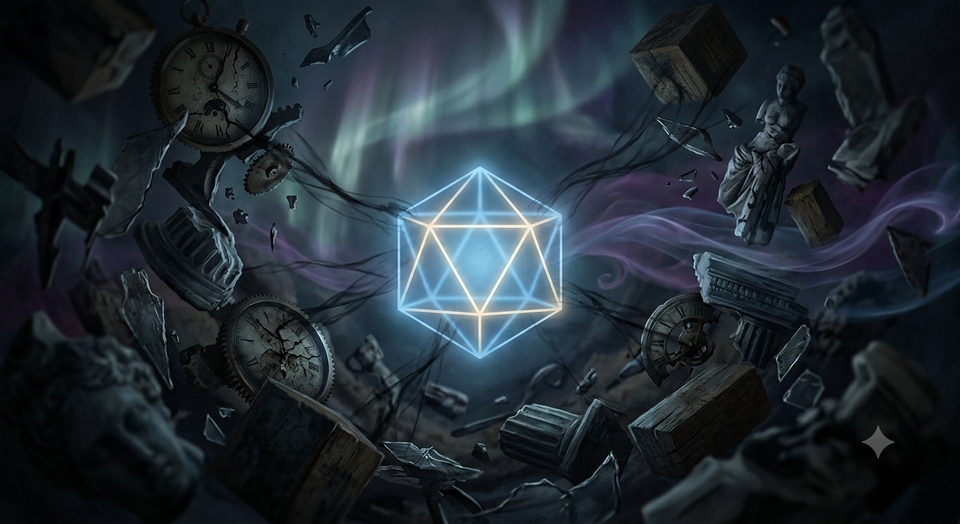
Reality is fear because of objects.
The mind is constantly surrounded by objects. Yet the mind knows, in some deep and essential way, that it is not an object. It is independent. Immovable. And still, reality continuously suggests otherwise.
The world surrounds the mind with things that can be broken, shaped, moved, consumed, controlled, destroyed. And because the mind exists among objects, it begins to assume that it too must be an object.
Perhaps this opens the door to understanding suggestion itself.
Why does the mind succumb to suggestion? Why does illusion work at all?
Because the mind is surrounded by objects within an object-world, and this environment continually implies that the mind itself must also be movable, shapeable, controllable.
What an open door that is.
An object can be broken, made, altered, manipulated. But the mind is none of these things. And yet the mind perceives objects so constantly that it begins to question itself:
“Am I this?”
“Am I that?”
And in this uncertainty, fear emerges.
If I cannot sense something, cannot move it, cannot manipulate it, cannot place it under my guidance or understanding, then I do not know what to do with it. Even touch itself is learning. To sense something is already to begin understanding it. Sight, hearing, taste, touch—all are ways the mind stabilizes reality through contact. Stabilizes the constant shock of time moving away in an instant. Such as music moves on and doesnt linger on a single note likened unto a life in an existential point of view.
And when contact fails, fear appears.
Fear is the uncertainty of what the mind should do in the presence of something it cannot properly orient itself toward.
I touch the object.
I see the object.
I hear it.
And through sensation, the mind says:
“This is what this is.”
When the object moves, my mind discerns it as separate from itself. Movement reveals distinction. Much like the old story of the Tyrannosaurus Rex being unable to perceive what does not move completely, the mind itself struggles with what it cannot distinguish from its environment.
And what does the mind do when something moves?
It attempts guidance.
It pushes.
Manipulates.
Uses.
Controls.
Consumes.
Not always maliciously—but instinctively.
Movement without my guidance becomes wonder.
And wonder carries fear within it.
The wind moves.
The sunlight shifts.
The tides rise and fall.
These forces move without my command, yet through consistency I learn their patterns. I come to understand them through repetition. But their source—their independent movement—leaves the mind in awe.
And if wonder is not held carefully, if fear overtakes it, then wonder becomes authority.
The Almighty.
The heavenly host.
The darkest lord.
What should have remained simple wonder at existence transforms into domination over the psyche because the mind no longer knows how to hold mystery without surrendering itself to it.
And this is the great confusion.
For the proper relationship to reality is not fear before authority, but wonder before existence.
I find it almost humorous to imagine being among heavenly hosts or the lords of the deepest hells, only to realize that what truly condemns me is far simpler:
I have forgotten how to learn from where I am.
The grace of existence is that these forces—the wind, the sun, the movement of life—can remain in their ordinary reality while still inspiring wonder and achievement. The purpose is not parasitic control over these forces. They are far greater than any invention I could impose upon them.
Rather, the purpose is to build a sustainable world through wonder itself.
A civilization where achievement arises from reverence instead of domination.
And perhaps this is why I do not fall into shock at each passing moment, each passing day.
I hold myself to the wonder of existence—not to its authority born from my fear of it.
But now we arrive at movement itself.
The mind, being immovable and independent from reality, reveals its nature through perspective. The mind can fundamentally alter its perception of reality while remaining itself unchanged. I was once this person and now I am another. This demonstrates its independence from the world it observes.
Yet movement challenges this independence.
Especially through love.
For love appears to move freely through locality, through distance, through separation. And then the mind asks:
“What is this movement?”
I can see movement—but how do I measure it?
And there, time appears.
To move from here to there requires time. Thus time emerges through movement itself. Something was here. Then it was there.
Movement creates time.
And because movement is more likened onto a belief since it itself is immovable that all beliefs dogma and religious faith all come from the minds confrontation with light and stillness that movement is not understood by the mind in its complete state so there must be eternal life.
And perhaps the mind cannot fully comprehend time because the mind itself is not movement.
It is immovability.
If the mind were truly constructed from movement alone, then even the slightest brushstroke of fear could annihilate it. It would simply be moved into death, guided toward dissolution by every passing force.
And this is why psychic manipulation is so dangerous.
To continually usher the mind toward death while continuing onward oneself.
Notice how much of modern existence constantly guides the mind toward death: media, fear, catastrophe, despair, endless images of destruction. If the mind were not fundamentally immovable, humanity would have already psychically annihilated itself countless times over.
So take notice whenever something attempts to bend your mind entirely toward movement.
Toward emotional dissolution.
Toward total submission.
Toward absolute guidance.
You are one step closer then to replacement.
Both gods and ideologies, emotions and spiritual systems, often seek to move the mind closer toward themselves. For once the mind is moved completely, it begins to appear as though whatever moved it must therefore be immovable and eternal.
Untouchable.
Beyond all challenge.
And perhaps this is why movement alone creates doctrines, sutras, scriptures, and beliefs. Humanity attempts to stabilize movement into structure. To make permanence from motion.
But the deeper realization may be this:
The mind itself is not movement.
The mind witnesses movement.
And because it witnesses movement without dissolving into it completely, it remains free.
Member discussion