The Recesses of The Mind
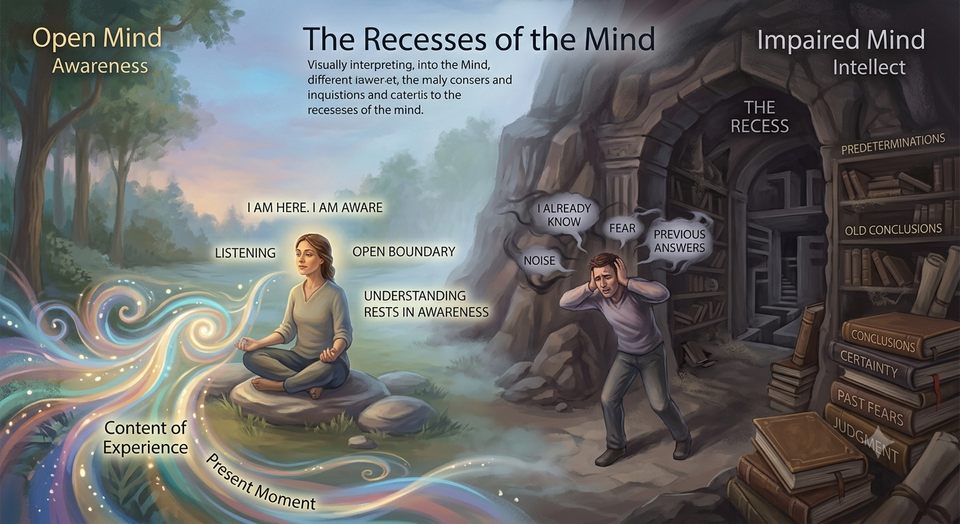
The Recesses of The Mind
The recess is where the mind goes when a conscious confrontation arrives—when something enters experience that requires conscious thought once again. Yet it is not a state that seeks conclusion. It is a state that opens the boundary of what is acceptable to the mind, even to the self, so that the content of experience may increase and still resolve without conclusion, without dependency upon the intellect.
The intellect looks upon every nuance of an experience in its effort to conclude. But this is not understanding. It is only the mind that has already drawn conclusions. The mind that has not concluded listens. It understands what to do.
Fear will always step forward and say, You do not know what to do. You have no certain answer. Yet the clarity of understanding is greater than the predetermination of conclusion. There is a profound difference between saying, I know what to do, and saying, I understand what to do. The first depends upon certainty; the second rests in awareness.
If the mind is unimpaired—not impaired by anything other than remaining present—it simply says: I am here. I am aware. I am in a constant state of learning and acceptance. Then, even when conflict arrives, with all its confusion, anxiety, and insecurity, one remains in that state. One accepts. One listens. One learns.
But when the mind is impaired, it seeks to place itself into a recess—a recess like a child wandering away to play. And what is found there? Suddenly there appear all the conclusions already made. The mind returns from that recess carrying them, and now confronts the present experience not as it is, but with what the intellect concluded perhaps once, perhaps a thousand times before.
This is hearing, not listening.
For the conclusion waiting in that recess is heard before the present moment is ever allowed to speak. And because it is heard first, it prevents listening.





Member discussion